

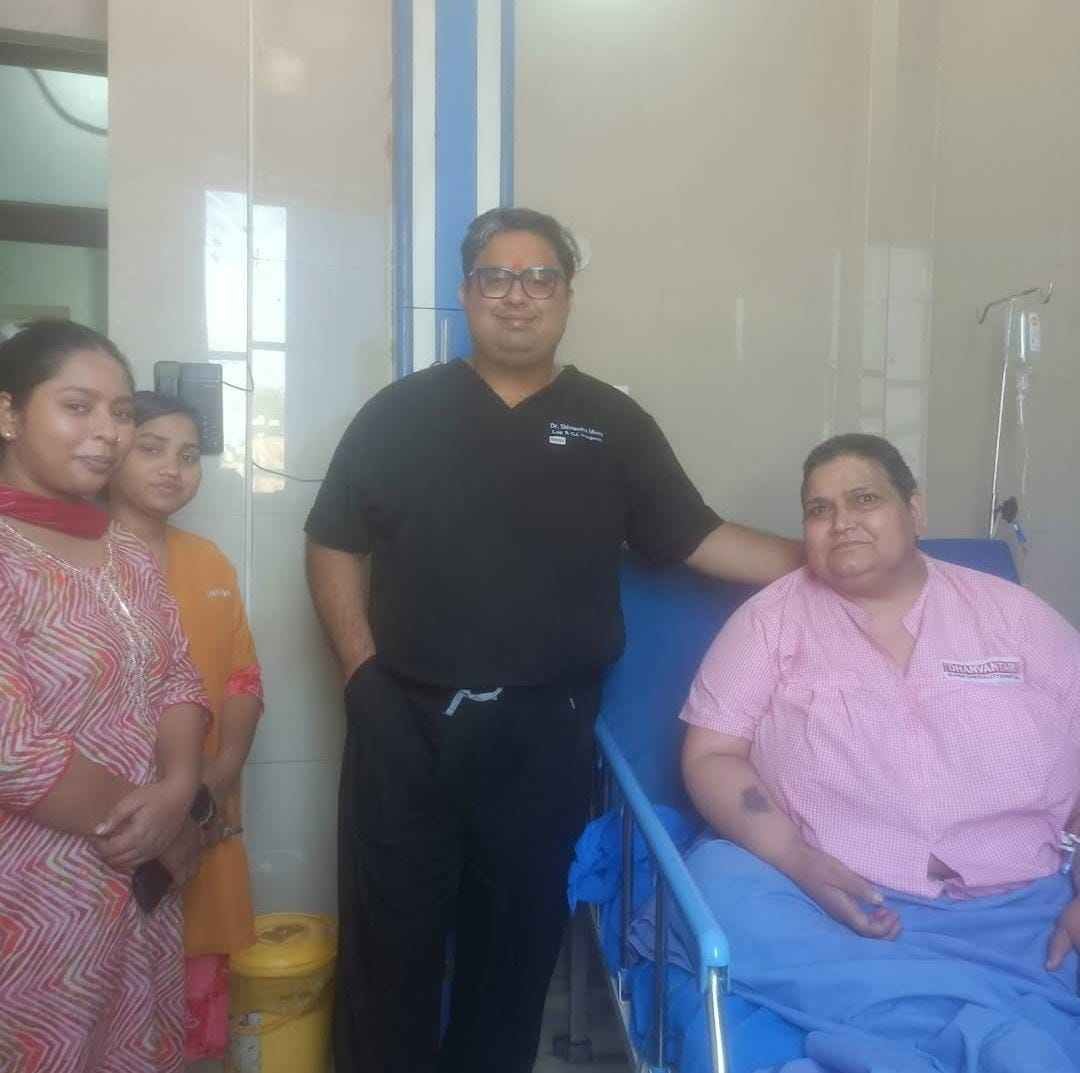
When someone hears the word NASH, the first thought is usually about the liver.
But according to Dr. Shivanshu Misra, the real story often starts somewhere else — with the body’s metabolism.
Obesity, increasing waist size, insulin resistance, diabetes, high blood pressure and abnormal cholesterol can come together as metabolic syndrome. When these problems continue for years, the liver can also become affected.
This is one of the reasons Dr. Shivanshu Misra, a bariatric and metabolic surgeon, believes that fatty liver should not be looked at as an isolated liver problem.
What exactly is NASH?
NASH stands for non-alcoholic steatohepatitis. In simple terms, it means that there is fat in the liver along with inflammation and liver injury.
Medical terminology has changed in recent years. NASH is now increasingly referred to as MASH — metabolic dysfunction-associated steatohepatitis, while NAFLD is increasingly called MASLD — metabolic dysfunction-associated steatotic liver disease.
The change in terminology is important because it reflects what doctors such as Dr. Shivanshu Misra see in clinical practice: metabolic problems such as obesity and type 2 diabetes are closely connected with fatty liver disease.
Where does obesity fit into the picture?
Dr. Shivanshu Misra explains that obesity is not simply about carrying extra weight.
Excess body fat, especially around the abdomen, can be associated with insulin resistance. The body then has increasing difficulty using insulin effectively. Blood sugar can rise, diabetes can develop and fat metabolism can also become abnormal.
The liver is one of the organs affected by these changes.
Fat can accumulate inside the liver. In some people, this remains relatively simple fatty liver. In others, continued metabolic stress can lead to inflammation and liver injury, which is the stage associated with MASH/NASH.
So, in a simplified way, the connection can look like this:
Obesity → insulin resistance → metabolic problems → liver fat → inflammation → MASH/NASH
This does not mean every person with obesity will develop NASH. But obesity and metabolic dysfunction can significantly increase the risk.
What is metabolic syndrome?
This is a term Dr. Shivanshu Misra believes more people should understand.
Metabolic syndrome is not one single disease. It is a combination of risk factors that commonly occur together.
These can include:
- Increased abdominal fat
- High blood pressure
- High blood sugar or diabetes
- High triglycerides
- Low HDL cholesterol
A person may not feel sick even when several of these problems are present.
In India, the problem is substantial. A systematic review of 111 studies involving more than 133,000 adults estimated the prevalence of metabolic syndrome at around 30% among Indian adults.
A more recent ICMR-INDIAB national study also found a high burden of metabolic abnormalities across India, including 11.4% diabetes, 28.6% generalised obesity and 39.5% abdominal obesity.
For Dr. Shivanshu Misra, these numbers help explain why metabolic fatty liver disease is becoming such an important health issue.
Why is insulin resistance important?
Insulin resistance is one of the important links between obesity, metabolic syndrome and fatty liver.
When the body becomes resistant to insulin, the normal handling of glucose and fat can change. More fat can reach the liver, while the liver itself can also produce and store more fat.
This does not happen in exactly the same way in every patient.
Interestingly, even some Indian patients who are not considered obese can have insulin resistance and fatty liver. A study of non-obese Indian patients with NAFLD found insulin resistance to be common, including among people classified as lean.
This is why Dr. Shivanshu Misra says that simply looking at someone’s body size is not enough to understand their metabolic health.
Does every person with NASH have obesity?
No.
This is an important distinction.
Obesity is a major risk factor, but NASH/MASH can also occur in people who are not visibly obese. Genetics, insulin resistance, abdominal fat and other metabolic factors can play a role.
India has a particularly important reason to pay attention to this.
South Asian populations can develop abdominal and metabolic abnormalities at lower BMI levels than many Western populations. That means someone may say, “I am not very overweight,” while still having significant metabolic risk.
Dr. Shivanshu Misra, therefore, looks beyond BMI and considers the complete metabolic picture of the patient.
What happens if NASH continues?
NASH is important because inflammation and liver injury can lead to fibrosis, or scarring of the liver.
If fibrosis progresses significantly, cirrhosis can develop.
Again, this does not happen to every patient with fatty liver or NASH. Some people may never progress to advanced liver disease.
The concern is identifying those who are at greater risk.
This is why Dr. Shivanshu Misra believes that obesity, diabetes and metabolic syndrome should be addressed early rather than waiting until liver disease becomes advanced.
Can treating obesity help the liver?
This is where weight management becomes an important part of the conversation.
If excess weight is contributing to insulin resistance and metabolic dysfunction, losing weight can improve several of those problems. It can reduce liver fat and may improve inflammation and, in some patients, liver fibrosis.
For someone with severe obesity, the discussion may also include bariatric or metabolic surgery.
As a bariatric surgeon and metabolic surgeon, Dr. Shivanshu Misra works with patients for whom obesity has become a larger health problem rather than simply a weight issue.
Metabolic surgery is not something every person with fatty liver requires. But for appropriately selected patients with severe obesity, significant and sustained weight loss through metabolic surgery can improve obesity-related conditions, including type 2 diabetes and metabolic fatty liver disease.
The decision has to be based on the patient’s individual condition.
The liver may be showing what is happening elsewhere in the body
This is perhaps the easiest way to understand the relationship.
When a person has abdominal obesity, insulin resistance, diabetes, high blood pressure and abnormal cholesterol, the liver can become one of the organs affected by the same metabolic problem.
That is why Dr. Shivanshu Misra does not see NASH simply as a liver disease.
It is often part of a much bigger metabolic picture.
The American Association for the Study of Liver Diseases also describes MASH as a condition commonly associated with metabolic risk factors such as obesity, type 2 diabetes, high blood pressure and high cholesterol.
What should people with obesity and fatty liver do?
Dr. Shivanshu Misra believes the first step is not to panic.
It is to understand what is happening.
If you have obesity, diabetes, increasing waist size or a fatty liver finding, speak with a qualified doctor and assess your metabolic and liver health. Depending on the situation, doctors may evaluate blood sugar, liver enzymes and the possibility of liver fibrosis using appropriate tests.
The aim is to identify risk early.
Because once metabolic problems are recognised, there are several areas that can be worked on — weight, diet, physical activity, diabetes, blood pressure and cholesterol.
For people with severe obesity, metabolic surgery or bariatric surgery may also be considered when medically appropriate.
Dr. Shivanshu Misra: Treat the Metabolic Problem, Not Just the Liver
For Dr. Shivanshu Misra, the relationship between obesity, metabolic syndrome and NASH is easier to understand when we stop looking at these conditions separately.
A patient may come to the doctor because of fatty liver.
But behind that fatty liver there may be abdominal obesity, insulin resistance, diabetes or metabolic syndrome.
That is why treating the underlying metabolic problem matters.
NASH is not simply a liver story. It can be a reflection of what is happening to the body’s overall metabolic health.
And for Dr. Shivanshu Misra, recognising that connection early can give patients a better opportunity to protect both their metabolic health and their liver in the long run.
For more info visit : https://drshivanshumisra.com/

